The Amazon Cooperation Treaty Organization (ACTO) is the main platform for cooperation and joint action among the Amazonian countries, transforming political commitments into concrete results for the Amazon and its peoples.
We work through integrated thematic areas, special commissions, specialized networks, and regional projects that connect governments, technical institutions, local communities, and international partners.
This approach reflects the new mandates defined in the Belém (2023) and Bogotá (2025) Declarations, which expanded ACTO’s role as a regional platform for cooperation and joint action.
Political mandates
ACTO operates based on political mandates established by the eight Amazonian countries. These mandates represent political and strategic agreements that guide joint work for integration, sustainability, and cooperation in the Amazon.
Three key milestones guide this action: the Amazon Cooperation Treaty (1978), the Belém Declaration (2023), and the Bogotá Declaration (2025). Together, they strengthen ACTO as a regional reference for cooperation and Amazonian governance.

Amazon Cooperation Treaty (1978)
This is the legal instrument that gave rise to ACTO. It establishes the principles of sovereignty, solidarity, cooperation, and sustainable development, creating a permanent foundation for Amazonian integration.
Belém Declaration (2023)
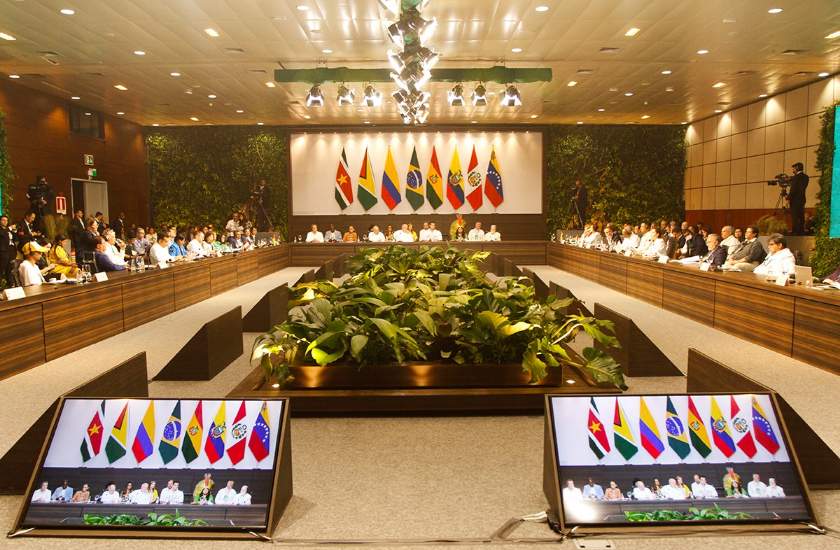
The Belém Declaration renewed political dialogue among the Amazonian countries and defined a common agenda for the region. It reinforces themes such as biodiversity, bioeconomy, climate, just energy transition, and the participation of Indigenous Peoples and local communities. It also reaffirmed ACTO as the main coordination mechanism for regional cooperation in the Amazon.

Bogotá Declaration (2025)
The Bogotá Declaration consolidated a new stage of Amazonian cooperation.
The Declaration establishes new instruments and political bodies that expand ACTO’s capacity to coordinate actions among its Member Countries.
Cooperation Instruments
ACTO implements its political mandates through cooperation instruments that connect countries, institutions, and communities.
Special Commissions
The commissions are sectoral political bodies where ministers and national authorities discuss specific themes and guide ACTO’s technical work.
Special Commission on Environment
Coordinates regional policies focused on the conservation of forests, biodiversity, and natural resources of the Amazon.It promotes technical cooperation among countries, strengthens the implementation of international environmental agreements, and provides guidance to the regional mechanisms on forests (RAFO), water (RADA), and fire (RAMIF).
The Commission also oversees the Amazon Forest Program, the Joint Mechanism for Climate Change Mitigation and Adaptation, and the Amazon Alliance against Deforestation.
Special Commission on Health of the Amazon (CESAM)
This is the political reference body for regional actions in health, sanitation, and food security.
Reactivated in 2023, CESAM brings together ministers and health authorities from Amazonian countries to strengthen cross-border cooperation, improve epidemiological surveillance, and integrate public policies with an intercultural approach.
The Commission also fosters dialogue between scientific and traditional medicine, valuing the knowledge of Indigenous Peoples and local communities.
Special Commission on Public Security and Cross-Border Illicit Activities
This commission works to strengthen regional cooperation in public security, justice, and intelligence, addressing environmental crimes and cross-border illicit activities that threaten the sovereignty and integrity of Amazonian ecosystems.
Its objectives include coordinating joint operations, exchanging information among security forces, and developing regional policies to combat illegal mining, wildlife and timber trafficking, smuggling, and money laundering.
The Commission provides guidance and oversight for the Amazon International Police Cooperation Center, based in Manaus.
Regional Mechanisms
The regional mechanisms are permanent structures for technical cooperation, created under political mandates. They bring together national authorities and experts from the eight Member Countries, coordinated by ACTO’s Permanent Secretariat (PS/ACTO).
Amazonian Mechanism for Indigenous Peoples (MAPI)
A permanent space for dialogue between governments and Indigenous Peoples of the Amazon region. Created by ACTO’s Member Countries, MAPI strengthens the full and effective participation of Indigenous Peoples in regional governance, promoting respect for their rights, cultures, and ways of life.
It integrates public policies, ancestral knowledge, and scientific research to enhance the management of Indigenous territories, protect biodiversity, and ensure the well-being of forest peoples. MAPI also follows the work of the Amazonian Forum of Indigenous Peoples and Traditional Communities, consolidating cooperation between governments and Indigenous leaderships.
Amazonian Financial Mechanism (AFM)
An instrument established to mobilize and manage financial resources dedicated to the sustainable development of the Amazon.
The AFM strengthens regional capacity to finance strategic projects, connecting governments, development banks, and international cooperation agencies.
Through its Programmatic Fund, it channels reimbursable and non-reimbursable resources into actions on water, forests, climate, Indigenous Peoples, health, and sustainable economy.
With transparent management and results-oriented focus, the AFM consolidates ACTO as a regional platform for cooperation and sustainable financing.
Specialized Networks
The networks are specific thematic platforms composed of sectoral authorities (for example, from each country’s water or forestry agencies). They operate within regional mechanisms and programs, sharing data, experiences, and technical best practices.
Amazon Network of Water Authorities (ANWA)
RADA is the technical cooperation platform that brings together the water resources authorities of the Amazonian countries.
Created in 2023, during the Belém Summit process, the network promotes the sustainable and integrated management of water in the region, strengthening data exchange, harmonization of protocols, and the joint implementation of programs on surface and groundwater.
Composed of national water institutions, ANWA supports the implementation of the Strategic Action Program (SAP) and the Regional Protocols of the Amazon Hydrological Network (AHR) and the Water Quality Network (WQN), contributing to hydrometeorological monitoring and early warning in the Amazon.
The current presidency is held by the Plurinational State of Bolivia.
Amazon Network of Forest Authorities (RAFO)
RAFO brings together the forestry institutions of the Amazonian countries to strengthen cooperation in forest conservation, sustainable management, and the fight against deforestation.
Created in line with the mandates of the Belém Declaration (2023), the network seeks to integrate public policy, science, and innovation to protect the world’s largest tropical forest.
Its main actions include implementing ACTO’s Amazon Forest Program, exchanging best practices in sustainable forest management, restoring degraded areas, and providing technical support to the initiatives of the Amazon Fire Management Network (RAMIF).
Amazon Network for Integrated Fire Management (RAMIF)
RAMIF was established to strengthen regional cooperation in wildfire prevention and control, in accordance with the Memorandum of Understanding on Cooperation and Mutual Assistance for Integrated Fire Management, approved by the Member Countries.
The network coordinates prevention, monitoring, rapid response, and recovery actions in affected areas, promoting information exchange and technical capacity building among the countries.
Its 2024–2026 Work Plan establishes four strategic areas, including mutual assistance and timely response in case of wildfires, the development of alert systems, and the strengthening of the Fire and Forests Module of the Amazon Regional Observatory (ARO).
Programs
Amazon Basin Strategic Action Program (SAP)
The SAP is the first regional instrument agreed upon by the Amazonian countries for the integrated management of the Amazon Basin’s water resources.
It defines 19 strategic actions aimed at water conservation, institutional strengthening, and climate change adaptation.
Among its main results are the creation of regional networks such as RADA, water quality monitoring, the development of hydrometeorological alert systems, and the advancement of scientific and technical cooperation among the countries.
The SAP is a milestone of Amazonian cooperation and serves as a foundation for new initiatives focused on protecting water, aquatic ecosystems, and life in the region.
Biological Diversity Program
This program promotes regional cooperation to conserve, restore, and sustainably use Amazonian biodiversity, integrating science, public policy, and traditional knowledge.
It values the knowledge of Indigenous Peoples and local communities, bringing together governments, scientific institutions, and civil society in joint actions that strengthen conservation policies, combat wildlife trafficking, protect ecosystem services, and foster sustainable economic alternatives.
The program also supports the Rapid Assessment of Amazonian Biodiversity, a pioneering initiative that combines science and traditional knowledge to guide evidence-based decision-making.
Amazon Forest Program
The Amazon Forest Program was created to promote sustainable forest management, strengthen the fight against deforestation, and restore degraded ecosystems.
It articulates public policies, science, and innovation, supporting countries in implementing the Amazonian Network of Forestry Authorities (RAFO) and developing the Amazon Alliance to Combat Deforestation.
Beyond protecting the world’s largest tropical forest, the program generates social and economic benefits, boosting sustainable value chains and promoting community-based forest management.
It also recognizes the essential role of Indigenous Peoples and traditional communities in the conservation and sustainable management of the Amazon.
Regional Dialogue
ACTO recognizes that Amazonian cooperation can only be strengthened through dialogue among the diverse actors of the region.
For this reason, it promotes and supports permanent spaces for participation, connecting governments, Indigenous Peoples, local communities, academia, the private sector, and civil society.
These spaces contribute to a more inclusive and participatory governance, enhancing integration among sectors and bringing regional policies closer to Amazonian realities.
Main dialogue spaces
Amazon Dialogues
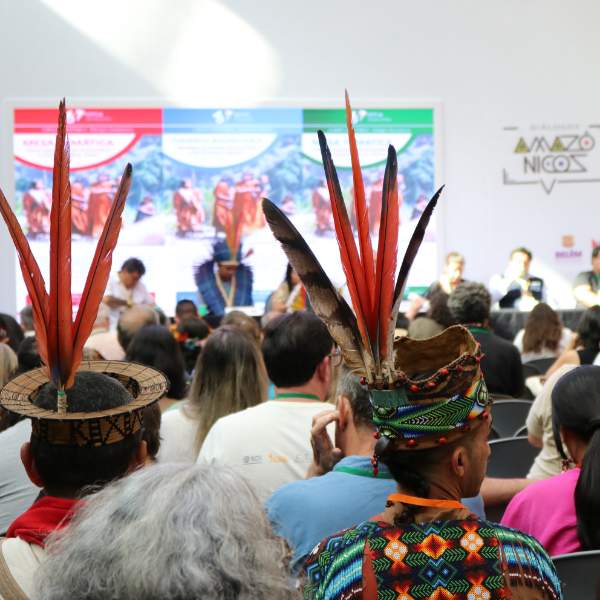
A plural meeting that brings together Indigenous Peoples, youth, local communities, and social organizations to build proposals and strengthen regional action.

Forum of Amazonian Cities
Connects local and municipal governments around sustainable solutions for urban development in the region.
UNAMAZ (Association of Amazonian Universities)
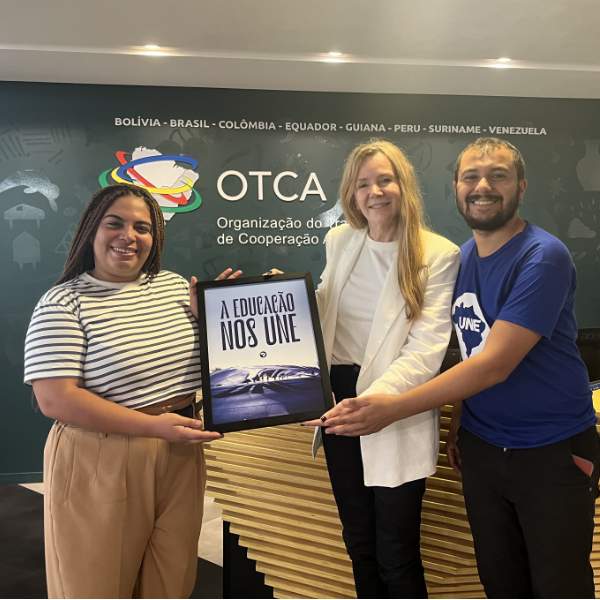
A network that promotes academic, scientific, and technological cooperation.
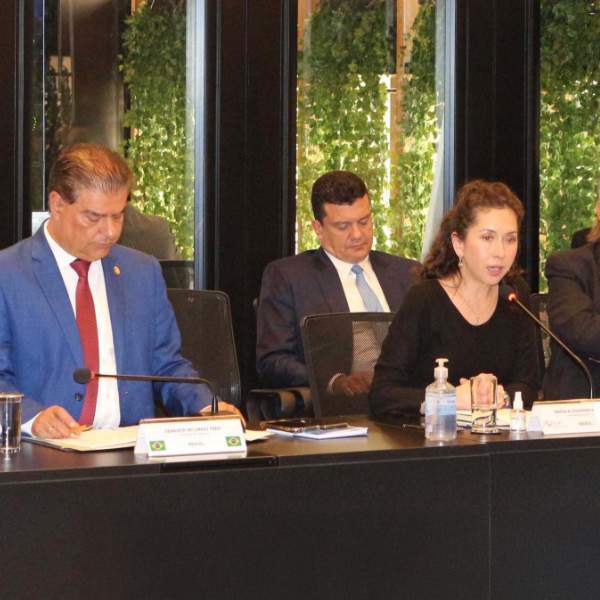
Parlamaz (Amazonian Parliament)
Promotes political and legislative integration among the Amazonian countries.


