The election of Víctor Manuel Noriega Reátegui brings to a close the Brazilian leadership, which revived the parliamentary body’s activities and expanded parliamentary dialogue among Amazonian countries.
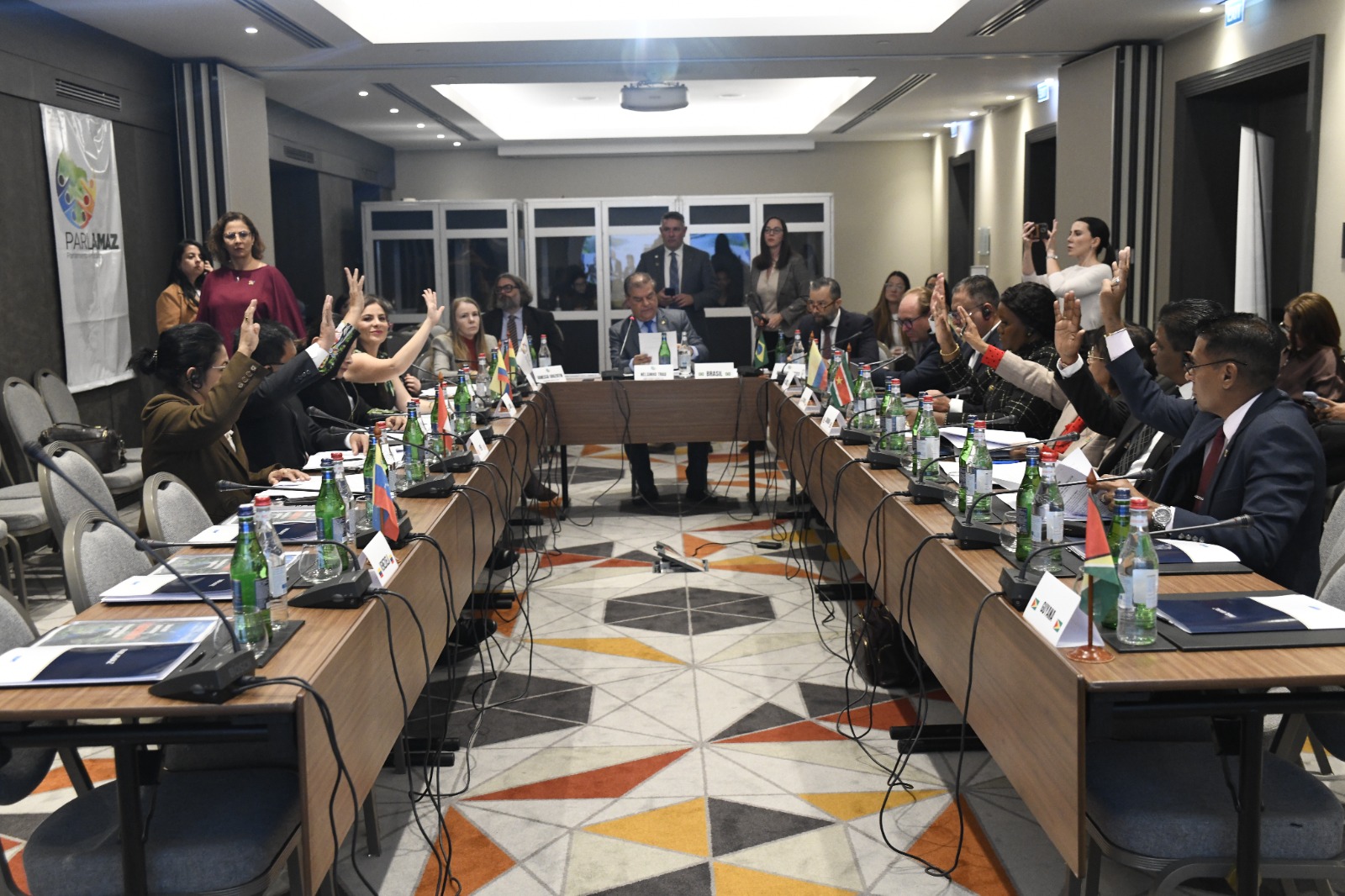
The Amazonian Parliament (Parlamaz) is once again presided over by Peru, the country where it was established in 1989. Peruvian Senator Víctor Manuel Noriega Reátegui was elected by acclamation during an assembly held in Yerevan, Armenia, on the sidelines of the COP17 on Biodiversity, this Wednesday (28). He succeeds Senator Nelsinho Trad (PSD-MS), whose tenure was marked by the resumption of the parliamentary body’s activities in 2020, after years of inactivity, and by efforts to advance a cooperation agenda among Amazonian countries.
In his remarks following the election, Noriega Reátegui stated that he intends to continue the work carried out by the Brazilian senator and bring together different national perspectives around a shared development agenda for the Amazon.
“This is not about surpassing what has been done, but about continuing to move forward together,” said the new president. Noriega Reátegui also asked Senator Nelsinho Trad to continue contributing to the parliamentary body, highlighting his experience and ability to bring together representatives from across the region.
Parlamaz was reactivated in December 2020, during the COVID-19 pandemic. One of the first challenges was to restore dialogue among delegations and establish the conditions needed to resume its activities. In 2021, the Parliament’s Joint Secretariat was established to support its work and facilitate dialogue among the countries.
During this period, technical visits were carried out in Colombia, Brazil, and Peru, bringing parliamentarians closer to experiences in sustainable production, research, and community-based initiatives. In 2025, the agenda began focusing on three key areas: forest and ecosystem restoration, sustainable bioeconomy, and integrated fire management. Key outcomes include a proposal to establish a parliamentary observatory on forest restoration and the development of a roadmap of actions for integrated fire management.
Vanessa Grazziotin Highlights the Historical Importance of Parlamaz’s Reactivation
The Executive Director of the Amazon Cooperation Treaty Organization (ACTO), Vanessa Grazziotin, credited Senator Nelsinho Trad, alongside Brazilian parliamentarians and representatives from other countries, with playing an important role in the reactivation of Parlamaz. A former senator representing the state of Amazonas, she stated that the body’s reactivation has already become part of its history and advocated for continuity under the new presidency.
“This is an important role, one that has already been written into and marked in the history of this Parliament,” Vanessa stated.
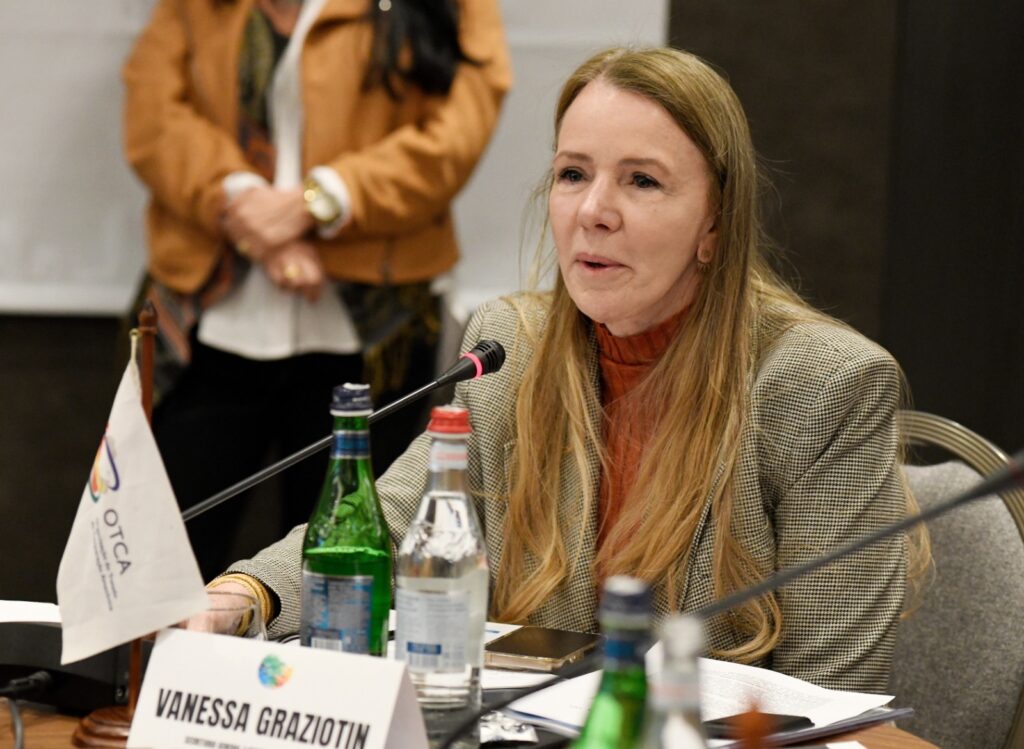
She also emphasized the need to raise Parlamaz’s profile and ensure the conditions necessary for its continued operation. Among the next steps is strengthening institutional relations with ACTO, which brings together the eight Amazonian countries.
During Senator Nelsinho Trad’s tenure, dialogue was maintained with parliamentary delegations, foreign ministries, and representatives of the organization to explore ways of bringing the two institutions closer together. The proposal to establish a regular channel of dialogue with ACTO is one of the outcomes of this work.
The formal establishment of a permanent relationship between Parlamaz and the organization, through an additional protocol to the treaty, was not completed during his tenure. Progress on this process remains on the parliamentary body’s agenda and will be one of the challenges facing the new presidency. The initiative aims to provide greater stability to dialogue between legislative bodies and regional cooperation mechanisms.
Senator Nelsinho Trad Links the Amazon to Water Security in the Pantanal
In his management report, Senator Nelsinho Trad linked the Amazonian agenda to the interests of Mato Grosso do Sul, the state he represents, which is not part of the Legal Amazon. The connection, he explained, lies in water: moisture released by the forest is carried by winds and contributes to the rainfall that replenishes the Pantanal.
“The forest releases water back into the atmosphere. Carried by the winds, this moisture is part of what are known as flying rivers and contributes to the rainfall that sustains the Pantanal,” Senator Nelsinho Trad stated.
In his view, conserving the Amazon also means protecting water security, biodiversity, and the living conditions of the population of Mato Grosso do Sul.
The report also highlights the importance of groundwater. Mato Grosso do Sul is home to part of the Guarani Aquifer System, which is shared by Brazil, Argentina, Paraguay, and Uruguay. In the Amazon, the Alter do Chão Aquifer is another major freshwater reservoir. Protecting these resources requires scientific knowledge, planning, and cooperation.