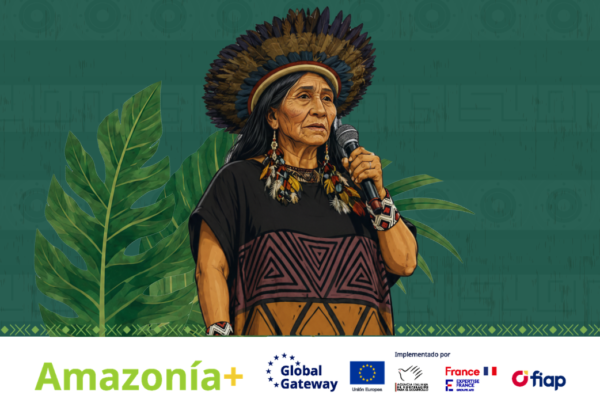
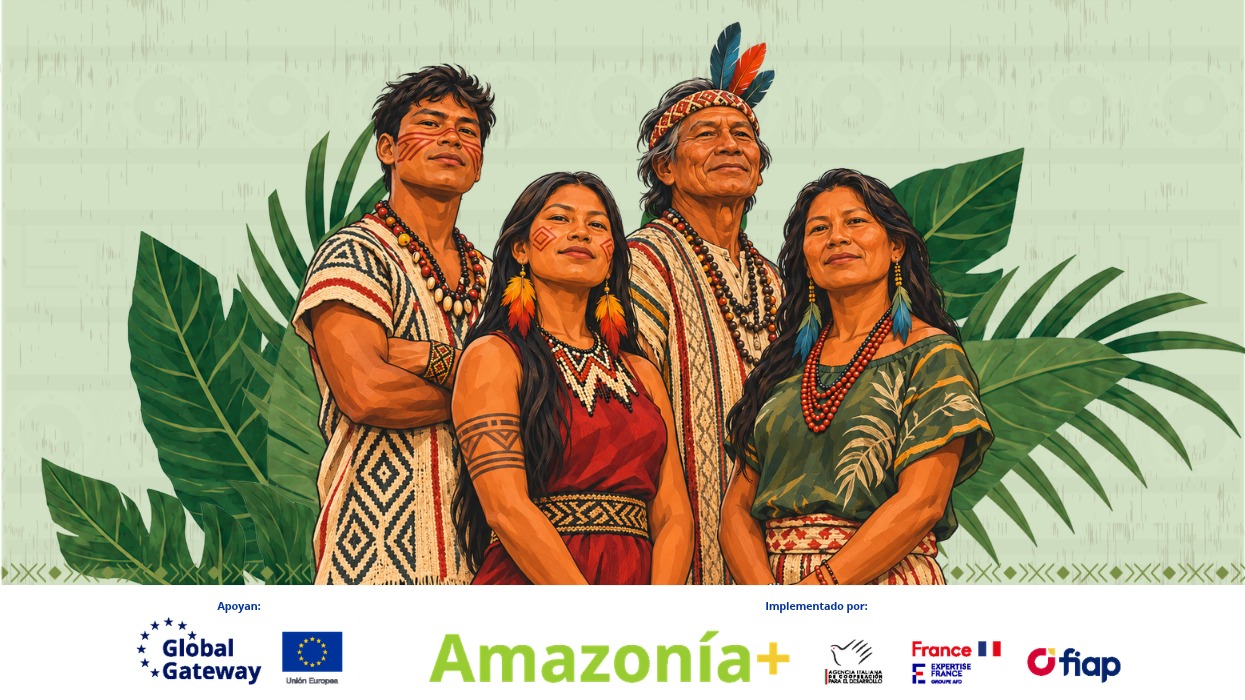
The first series of Amazonian Voices brings together testimonies from Indigenous and government representatives, as well as key stakeholders who participated in the development of the Amazonian Mechanism of Indigenous Peoples (MAPI), launching a record that will continue documenting the history of this regional governance process.
Major cooperation processes are often documented through declarations, resolutions, and agreements. However, behind every decision are also stories, lessons learned, and experiences that help explain how consensus is built and what it means to those involved. Preserving this human dimension is the purpose of Amazonian Voices.
The initiative brings together testimonies from Indigenous representatives, government authorities, and other key stakeholders who were involved in the development of MAPI. Through their reflections, this first series documents how this journey was experienced from different perspectives, helping preserve a collective memory that complements the institutional history of the Mechanism and provides insight into its development through the experiences of those who took part in it.
Amazonian Voices is developed under the Indigenous Roots for Amazonian Governance Grant (RAIGA) and implemented by the Permanent Secretariat of ACTO within the framework of the Amazonia+ Program, funded by the European Union and implemented by the Italian Agency for Development Cooperation (AICS), the International and Ibero-American Foundation for Administration and Public Policies (FIIAPP), and Expertise France.
Listening to strengthen governance
Although each testimony reflects a different experience, the interviews brought together in this first series reveal a shared conviction: MAPI represents much more than an institutional negotiation. For those who participated in its development, it opened a permanent space for dialogue between governments and the Indigenous Peoples of the Amazon.
The testimonies also reveal that the meaning of the Mechanism varies according to each participant’s experience. For some, the greatest achievement is the recognition of Indigenous Peoples as key actors in regional governance. For others, the value of MAPI lies in having created a space to build agreements, share experiences, and strengthen an Amazonian agenda developed jointly. This diversity of perspectives is precisely one of the main contributions of Amazonian Voices: documenting the same process through the eyes of those who experienced it and enriched it with their own experiences.
Dario Silva, from Colombia’s Cubeo people, summarizes this significance from the perspective of those who see MAPI as an opportunity to strengthen Indigenous participation in regional decision-making spaces.
“MAPI makes it possible for the voices of Indigenous Peoples to reach other spaces, such as ACTO.”
A similar perspective is shared by Ângela Amanakwa Kaxuyana, Brazil’s Indigenous Co-Chair of MAPI, who considers the Mechanism a recognition of the role Indigenous Peoples play in protecting the Amazon and an opportunity to establish a new level of dialogue with States.
“For us, Indigenous Peoples, the creation of the Mechanism represents a very timely recognition of the role we play in protecting our territories. It also provides an opportunity for dialogue between the territories and governments, but at a different level: a government-to-government dialogue.”
A process built through dialogue
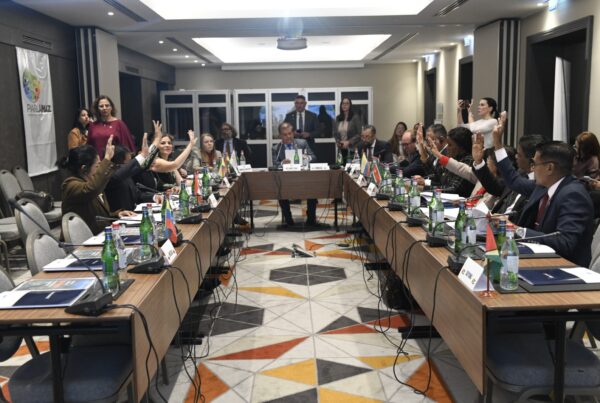
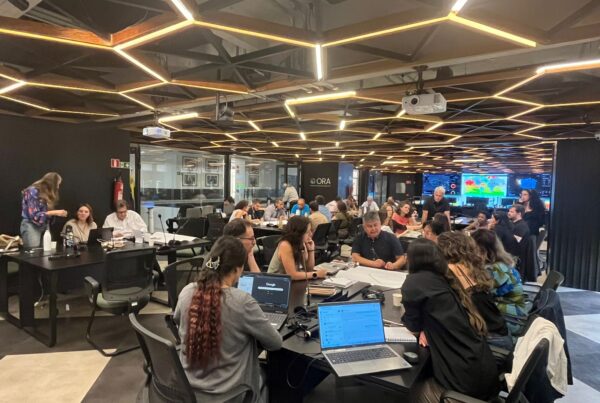
The interviews gathered in Amazonian Voices also help us understand that the development of MAPI was, above all, an exercise in dialogue. Behind every agreement were different national realities, diverse priorities, and an ongoing effort to build consensus between governments and Indigenous organizations. This dimension of the process, which is difficult to understand through official resolutions alone, emerges clearly in the accounts of those who participated directly in the negotiations and the initial stages of the Mechanism’s implementation.
From Colombia, Adriana Marcela Sinning Durán, from the National Natural Parks of Colombia, emphasizes that the process went far beyond providing a space for participation.
“I would say it was not simply participation, but true leadership. (…) Together with the different institutions, what we did was foster a conversation and dialogue to bring together all the processes and lines of work that we had been developing and that need to continue being strengthened.”
Her testimony highlights the exchange of experiences and the need to ensure continuity in the work processes already underway in the countries.
A similar assessment is expressed by Gabriela Belmonte, representative of the Government of Venezuela, who notes that the creation of MAPI responds to a long-standing aspiration of Indigenous Peoples and governments.
“The creation of MAPI represents the fulfillment of a historic demand. For the first time since ACTO was established, Indigenous Peoples are sitting alongside governments to build a single Amazonian voice.”
By bringing together these perspectives, Amazonian Voices shows that MAPI cannot be understood from a single point of view. Its history is made up of diverse experiences that, although rooted in different contexts, converge around the same idea: the development of a Mechanism based on dialogue, cooperation, and the pursuit of consensus to strengthen Amazonian governance.
A memory that continues to be built
The voices gathered in this first series show that the creation of MAPI does not mark the end of a process, but rather the beginning of a new stage. Following the Mechanism’s approval, the challenge now is to turn the agreements reached into concrete actions, strengthen spaces for participation, and consolidate a shared work agenda between ACTO Member Countries and the Indigenous Peoples of the Amazon.
From Suriname, Angéle Rachel Paulus-Noordwijk views this evolution as a natural outcome of the path taken over the past few years.
“MAPI has evolved from a conceptual framework into an increasingly concrete cooperation mechanism. In its initial phase, the emphasis was on dialogue and building trust. Today, it is moving toward a stage of implementation and tangible results.”
Her reflection echoes those of other interviewees, who emphasize that consolidating the Mechanism will depend on maintaining dialogue, strengthening cooperation among countries, and ensuring the active participation of Indigenous Peoples throughout its implementation.
In this context, Amazonian Voices takes on a significance that goes beyond documenting testimonies. This first series preserves the experiences of those who participated in the development of MAPI and opens the way for an ongoing documentation process that will continue incorporating new voices, lessons learned, and perspectives as the Mechanism progresses. In this way, the initiative helps strengthen collective memory while also providing a record of the process from the perspective of those who helped make it possible.
The testimonies featured in this article are part of the first series of Amazonian Voices, an initiative that brings together the experiences and perspectives of Indigenous representatives, government delegates, and other stakeholders who participated in the development and implementation of the Amazonian Mechanism of Indigenous Peoples (MAPI). Amazonian Voices is developed under the Indigenous Roots for Amazonian Governance Grant (RAIGA), and the series will continue to incorporate new voices from ACTO’s eight Member Countries, with the aim of preserving the memory of this regional cooperation process.
The Indigenous Roots for Amazonian Governance Grant (RAIGA) supports and accompanies the dialogue processes of the Amazonian Mechanism of Indigenous Peoples (MAPI). The grant is implemented by the Permanent Secretariat of ACTO within the framework of the Amazonia+ Program, funded by the European Union and implemented by the Italian Agency for Development Cooperation (AICS), the Foundation for the Internationalization of Public Administrations (FIAP), and Expertise France. The grant and technical assistance were provided by Expertise France.