“Past behavior is no longer enough to predict future behavior.” The statement by Arnaldo Carneiro, coordinator of the Amazon Regional Observatory (ARO/OTCA), summarized one of the central discussions of the Firethon, held on May 20 by the ARO with support from the CorAmazonia project of the German Agency for International Cooperation (GIZ).
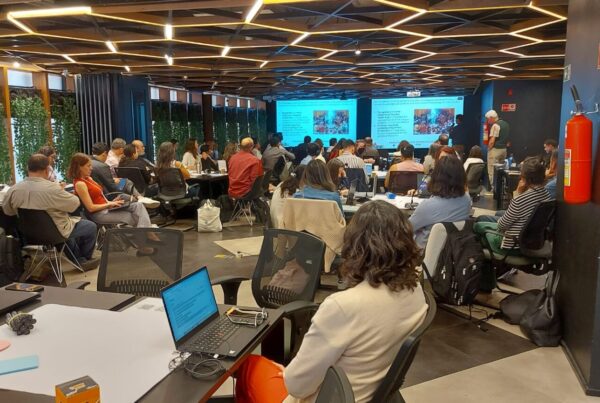
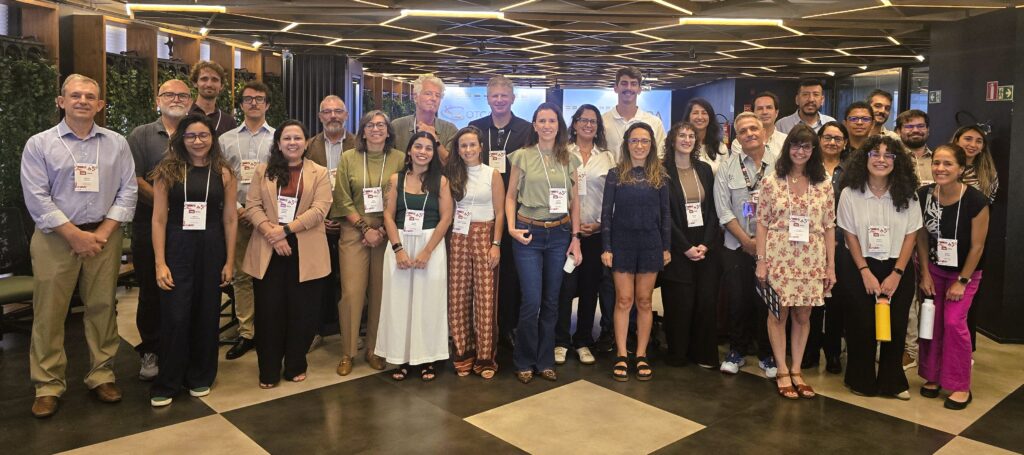
The event brought together more than 30 specialists from research institutes, universities, international organizations, and non-governmental organizations to discuss innovations in predictive wildfire modeling in the Amazon. The goal of the Firethon is to build a shared understanding of the state of the art in wildfire prediction, data interoperability, and integrated fire management across the region.
According to Carneiro, wildfires are no longer isolated events and have become a reflection of structural transformations in the Amazon. “The Amazon is increasingly exposed to more frequent and intense fires, while response capacity remains far below what is needed,” he said.
For the ARO coordinator, the main challenge is shifting from a reactive approach to fire toward a preventive one. “We need to develop capacities to anticipate when higher-risk wildfire scenarios will emerge in the Amazon,” Carneiro stated.
Opening the event, Bivyane Rojas, chief of staff of the OTCA, emphasized the importance of regional and multisectoral coordination to address the growing wildfire crisis. “OTCA brings together networks of authorities from the eight Amazonian countries working on both integrated fire management and public health and safety. Exercises like this are important to connect these agendas and strengthen multisectoral action,” she said.
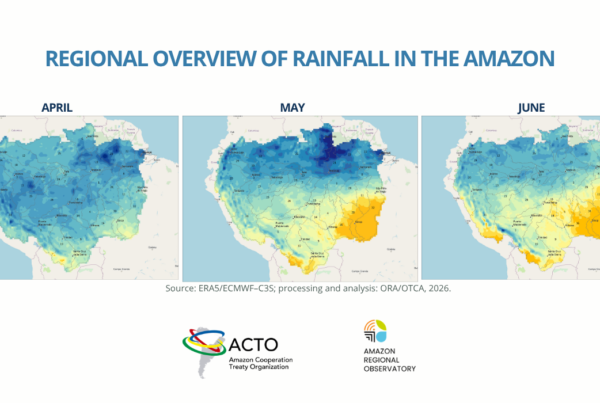
Firethon discussions addressed topics such as climate projections, fire ecology, remote sensing, El Niño impacts, forest degradation, hydric stress, and human-induced ignition.
Information for decision-making
Alexandra Syphard, from the Global Wildfire Collective, highlighted that predictive models must begin with concrete problems. “There are many models around the world, but you must start with the question, not with the model,” Syphard said.
Meanwhile, Ana Carolina Pessôa, from the IPAM, stressed that no single model can fully capture the complexity of fire in the Amazon. “Fire governance requires complementarity among models,” she said. According to the researcher, important gaps still remain, particularly regarding interoperability among systems, the incorporation of socioeconomic dimensions, and post-fire restoration strategies.
During the event, Renata Libonati, from the UFRJ, presented the reliability of climate projections across different time horizons and how this information can support prevention strategies by identifying periods of higher wildfire risk. .
For Douglas Morton, from NASA, predictive modeling still faces scientific gaps related to interactions among the atmosphere, vegetation, and oceans. “The Amazon is influenced by both the Atlantic and the Pacific,” he said. Morton also added that models need to advance not only in predicting ignitions, but also in forecasting fire spread.
Representatives from INPE, IPAM, NASA, FAO, CENSIPAM, Yale University, Columbia University, Woodwell Climate Research Center, Fundación Amigos de la Naturaleza, Global Wildfire Collective, UNAM, UFRJ, UnB, CIMA Foundation, and GIZ participated in the Firethon.
The Firethon precedes the event “Workshop on Data and Information for the Implementation of Integrated Fire Management in the Amazon Region – FIRE DATA,” taking place on May 21 and 22. The meeting aims to build a shared vision on data, platforms, and decision-making processes related to integrated fire management, while also identifying gaps, strengthening technical capacities, and generating strategic recommendations for Amazon regional integration.
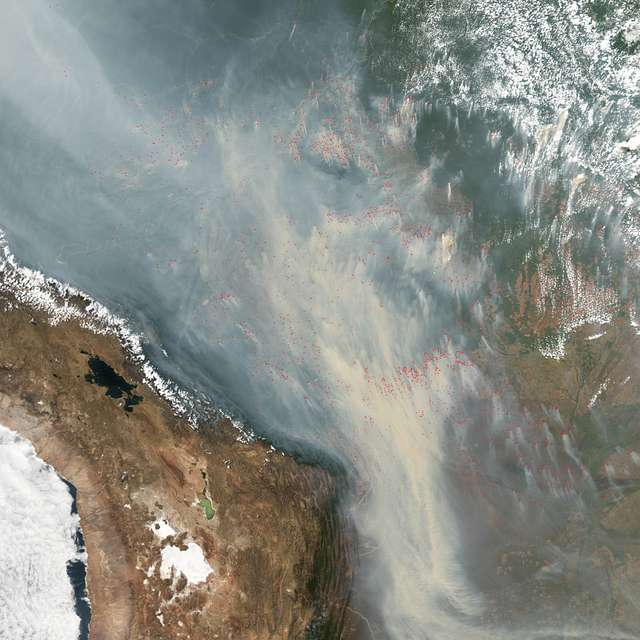
Cover image caption: A NASA satellite image shows wildfire hotspots in the Amazon and Bolivia in the same scene (August 2011), highlighting the regional scale of fires and the influence of climate and land-use conditions on wildfire spread.