The evolution of El Niño in 2026 is emerging as one of the main climate risk factors for the Amazon and Latin America. Recent assessments indicate a transition scenario, with signs of a possible new event developing in the second half of the year, although uncertainties remain.
Among the main consequences for the region are severe droughts, falling river levels, increased wildfire spread, and greater vulnerability of riverine populations. The most recent event occurred in 2024, when El Niño, combined with warming in the Tropical Atlantic, contributed to one of the most severe droughts ever recorded in the Amazon.
Analyses regarding the likelihood of a new El Niño event this year are based on official statements from institutions monitoring the Pacific Ocean and the atmosphere, including Peru’s Comisión Multisectorial encargada del Estudio Nacional del Fenómeno “El Niño” (ENFEN), Ecuador’s International Research Center on El Niño (CIIFEN), the United States’ National Oceanic and Atmospheric Administration (NOAA), and the United Nations’ World Meteorological Organization (WMO). All are scientific institutions with specific expertise on the El Niño phenomenon.
According to the latest bulletin from the U.S. agency, there is a 61% probability of El Niño formation between May and July 2026, with a tendency to persist at least through the end of the year. Meanwhile, CIIFEN stated in its April bulletin that the probability of a higher-intensity event in the next semester is relatively low, around 20%, suggesting a predominantly weak to moderate scenario.
At the same time, ENFEN maintained in its April bulletin the alert for a “Coastal El Niño,” a more localized warming of waters near the coasts of Peru and Ecuador, generally associated with intense rainfall along coastal areas. Expectations are that the Coastal El Niño will reach moderate intensity between June and July this year and continue through January 2027 at low intensity.
According to Isabelle Vilela, climate change specialist at the Amazon Regional Observatory (ARO/ACTO), the current scenario requires caution when interpreting forecasts.
“There is currently a favorable scenario for the development of El Niño from the second half of 2026 onward, but forecasts are still not fully consolidated regarding its intensity and regional impacts. In this context, continuous monitoring of oceanic and atmospheric conditions will be essential to refine scenarios and reduce uncertainties in upcoming updates,” Vilela explains.
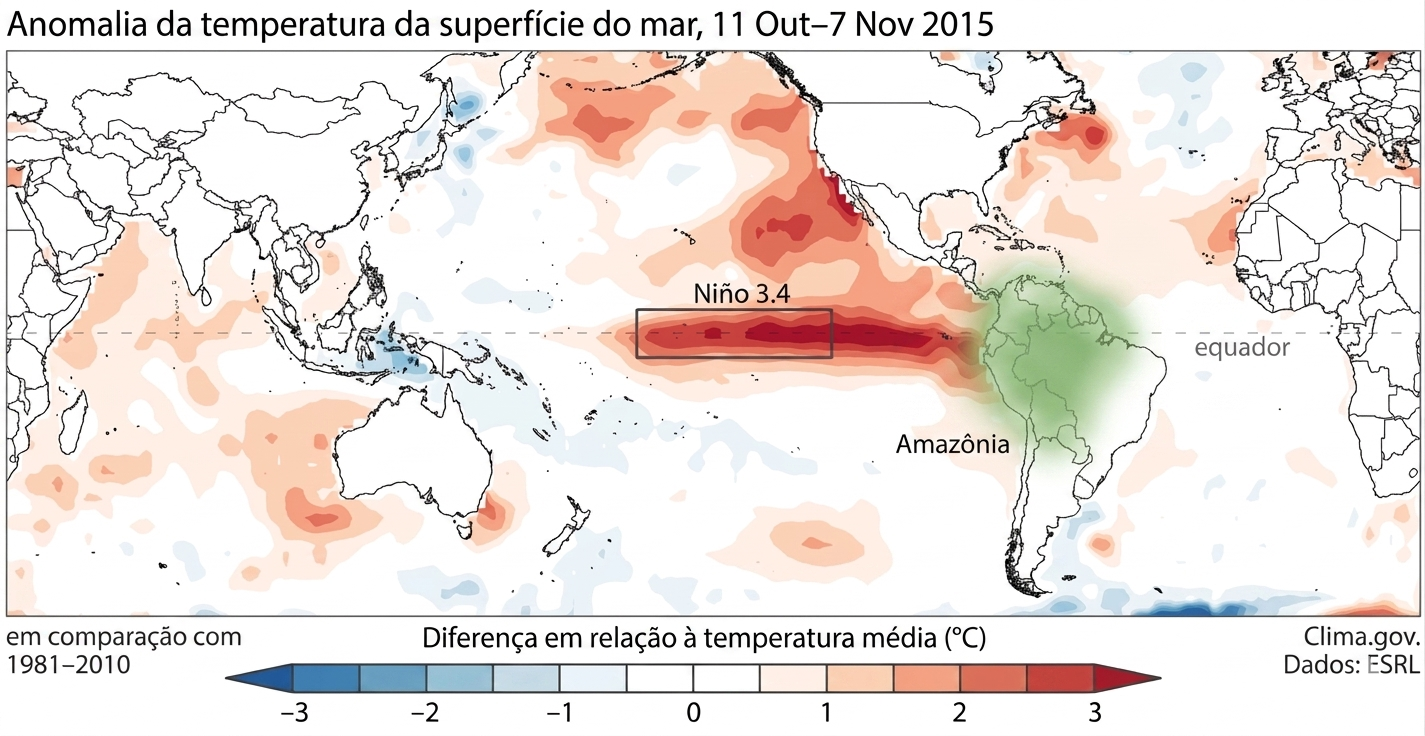
Part of this uncertainty is due to the fact that temperature anomalies in the equatorial Pacific must persist for at least three consecutive months for El Niño conditions to be officially confirmed. In addition, climate impacts usually emerge with a delay of several months.
The specialist also notes that the phenomenon does not behave uniformly across the Pacific, with important differences between the central and eastern Pacific, where Coastal El Niño is already exerting direct influence.
Risk of a New Extreme Drought?
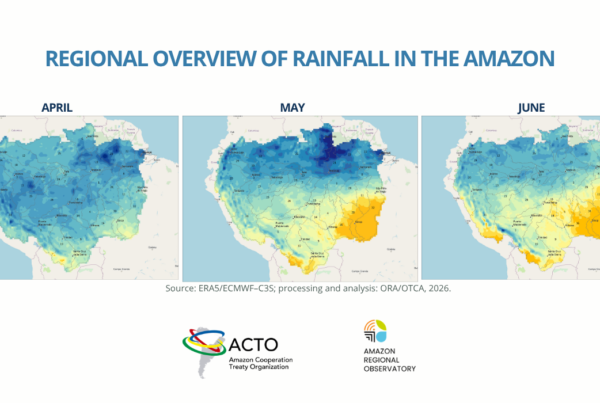
In the Amazon region, the possible evolution of El Niño may significantly alter rainfall patterns, with direct effects on hydrological systems, ecosystems, and local populations.
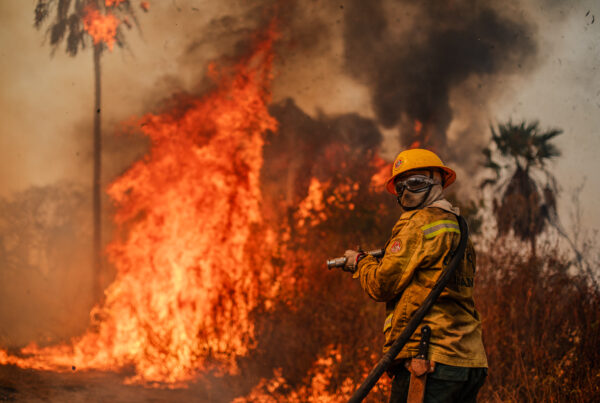
Another critical effect associated with El Niño is the increased risk of forest fires, especially under conditions of higher temperatures and lower humidity. “El Niño acts as an amplifying factor, creating highly favorable environmental conditions for locally initiated fires to become more intense, widespread, and difficult to control,” Vilela points out.
The economic impacts associated with El Niño tend to be broad and interconnected. Falling river levels may compromise navigability, affecting the transport of food, fuel, and supplies. Sectors such as agriculture, fisheries, and energy may also face significant losses.
Riverine and Indigenous populations are among the most vulnerable, facing risks related to water access, food security, and geographic isolation.
“Lower river levels compromise access to drinking water, hinder mobility and the transport of essential goods, and may isolate communities, affecting basic services such as healthcare and education,” the specialist states.
However, in the Amazon, impacts such as severe droughts, falling river levels, and increased wildfire risk do not depend solely on the intensity of El Niño in the Pacific.
“The impacts do not depend on a single factor. Anomalous warming in the tropical Atlantic can alter rainfall patterns and worsen drought conditions in the Amazon, while soil and vegetation conditions may either intensify or mitigate these effects,” Vilela explains.
She adds that, although it is not possible to say that recent extreme events will repeat themselves, the combination of climate variability and global warming continues to maintain a high risk of significant impacts in the Amazon, especially if El Niño occurs alongside abnormal warming in the tropical Atlantic, as happened in 2023–2024.
Regional Cooperation
Member countries of the Amazon Cooperation Treaty Organization (ACTO) recognize El Niño as one of the main climate risk factors for the Amazon region. In recent resolutions, governments have emphasized the need to strengthen regional cooperation to address extreme events through data sharing, improved monitoring and early warning systems, and the implementation of a joint risk management strategy.
The decisions also stress the importance of expanding emergency response capacity and reducing the vulnerability of populations facing increasingly severe droughts, floods, and forest fires.
In this context, the Amazon Regional Observatory (ARO/ACTO) plays a strategic role in data integration and decision-making support.
“Phenomena such as El Niño do not respect borders. The coordination of national policies and collective action among Amazonian countries are essential to anticipate risks, share data, and strengthen the response capacity of Amazonian countries in the face of extreme events,” says Arnaldo Carneiro, coordinator of the Amazon Regional Observatory (ARO/ACTO).
Subtitle: For El Niño to develop, sea surface temperatures in the central and eastern tropical Pacific must remain at least +0.5 °C above average for several consecutive months. Original figure from NOAA, edited with artificial intelligence.