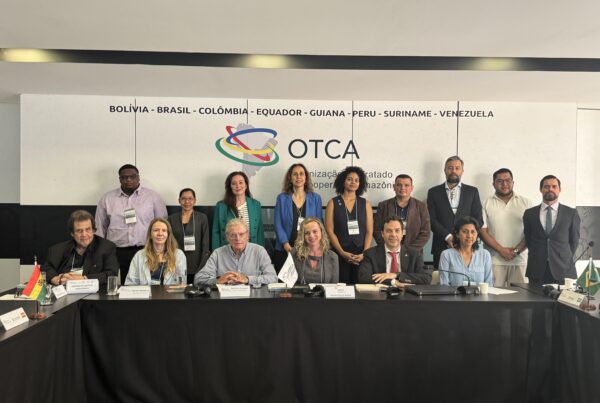
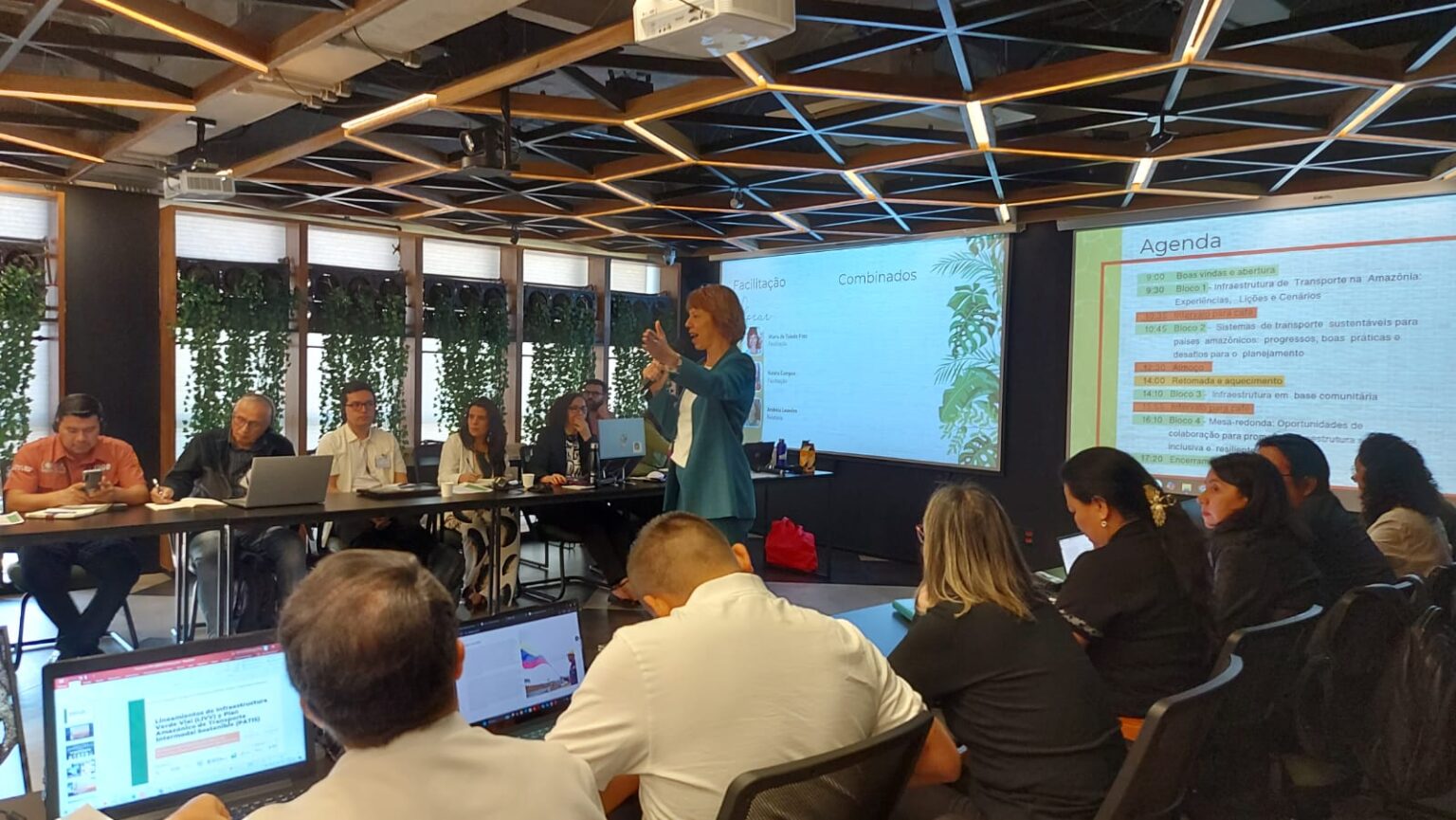
Brasília, June 30, 2026 – The Permanent Secretariat of the Amazon Cooperation Treaty Organization (ACTO) is hosting, this Tuesday at its headquarters in Brasília, the seminar “Building a Sustainable, Inclusive and Resilient Infrastructure Agenda for the Amazon”, a forum for dialogue bringing together representatives of the governments of the Amazonian countries, Indigenous organizations, academic institutions, experts and civil society organizations to exchange experiences and advance a shared vision for infrastructure planning in the Amazon region.
The seminar is organized by Derecho, Ambiente y Recursos Naturales (DAR), the Amazonian Network of Georeferenced Socio-Environmental Information (RAISG), the Working Group on Infrastructure and Socio-Environmental Justice (GT Infra), WWF, the Pan-Amazon Institute (IPA), the Pan-Amazon Social Forum (FOSPA), and the Foundation for Conservation and Sustainable Development (FCDS), with the support of ACTO and the Institute for Energy and Environment (IEMA).
The objective of the meeting is to share best practices and lessons learned on sustainable, inclusive and resilient infrastructure strategies, particularly in the transport sector, while generating inputs for a multi-stakeholder dialogue aimed at identifying opportunities for cooperation and coordination to promote infrastructure models that are compatible with the conservation of Amazonian ecosystems and the well-being of their populations.
The opening session featured remarks by ACTO Secretary-General Martin von Hildebrand; Julio César López, Coordinator for International Relations and Cooperation of the Coordinator of Indigenous Organizations of the Amazon River Basin (COICA); and María Inés Rivadeneira, WWF Regional Policy Lead for Latin America and the Caribbean.
In his remarks, the ACTO Secretary-General stressed that the challenge for the Amazon is no longer simply to expand existing infrastructure, but to define a new development model that meets the region’s needs without compromising the integrity of its ecosystems.
“Infrastructure in the Amazon is essential. No one can dispute that. But the question is no longer whether we should build infrastructure. The real question is what kind of infrastructure the Amazon needs in the twenty-first century.”
He also underscored the importance of conceiving infrastructure from a holistic perspective that strengthens both people’s well-being and the functioning of the Amazon rainforest.
For his part, Julio César López emphasized the importance of ensuring the active participation of Indigenous Peoples in developing solutions for regional connectivity, promoting infrastructure that respects territories, cultural diversity and the balance of the Amazon biome.
María Inés Rivadeneira stressed that cooperation among governments, Indigenous Peoples, civil society, the scientific community and international organizations is essential to promote planning that incorporates sustainability, climate resilience, ecological connectivity and integrated territorial management criteria from the earliest stages of infrastructure projects.
The seminar agenda includes panels on the historical evolution of transport corridors in the Amazon, regional connectivity, and ecological and road infrastructure, as well as presentations of experiences and best practices developed in Colombia, Ecuador, Brazil and Peru to advance more sustainable and inclusive transport systems. The discussions also include dialogue sessions aimed at strengthening cooperation among governments, Indigenous organizations, academia and civil society.
The seminar is being held in a context of growing regional cooperation to promote development models that integrate infrastructure, conservation and social well-being, in line with the Belém Declaration, adopted by the Amazonian countries in 2023, which promotes the strengthening of public policies and cooperation to incorporate sustainability standards into the planning and implementation of infrastructure projects in the Amazon.