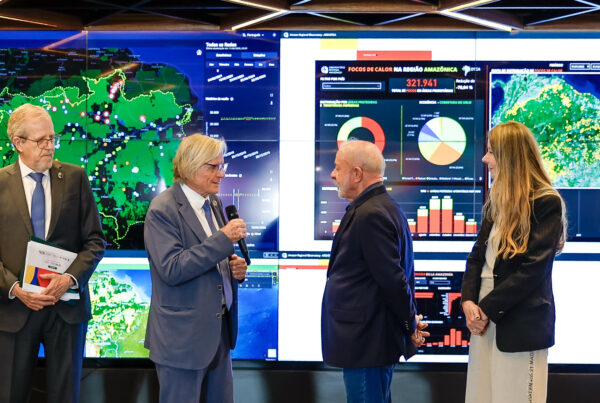
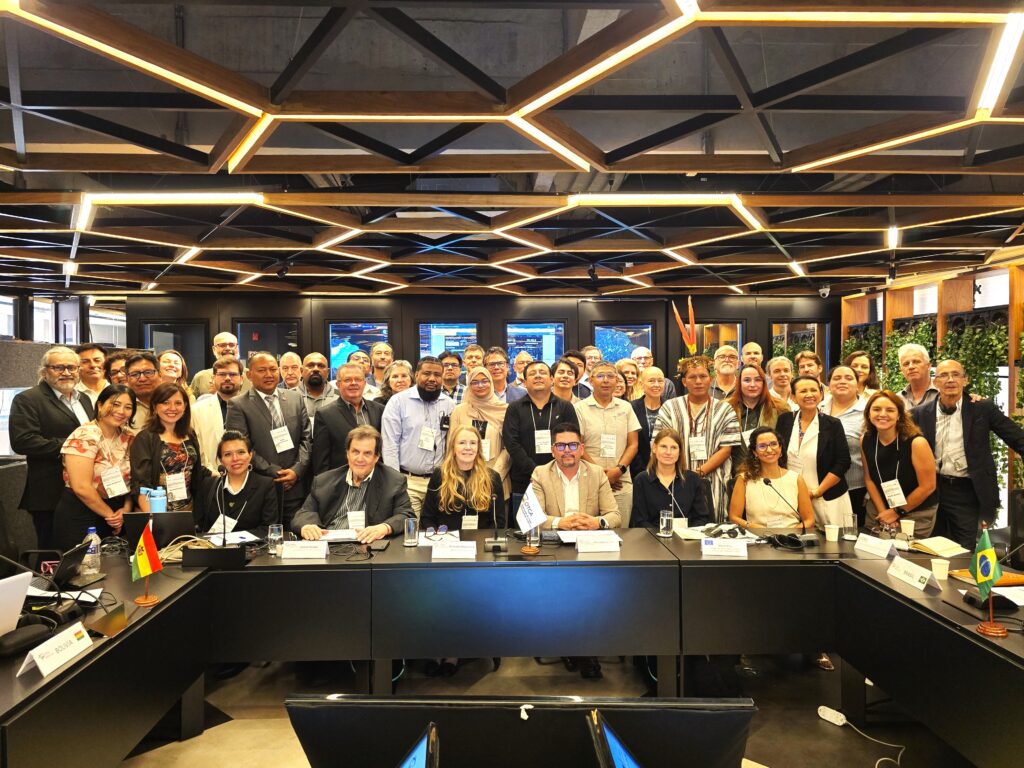
Representatives of the eight Member Countries of the Amazon Cooperation Treaty Organization (ACTO), experts and technical partners are meeting in Brasília on August 27 and 28 to advance the development of a regional approach to understanding and monitoring forest degradation in the Amazon.
The event, which brings together around 60 participants, is an ACTO initiative within the framework of the Amazon Network of Forest Authorities (RAFO), with technical support from the European Commission’s Joint Research Center (JRC) and support from the Amazonia+ Programme, funded by the European Union and implemented by Expertise France, the Italian Cooperation AICS and the Spanish FIAP.
The “Regional Meeting on Forest Degradation in the Amazon: Methodologies and Tools for Cooperation within the Amazon Network of Forest Authorities (RAFO)” seeks to bring together concepts, methodologies and experiences developed by the countries and identify common elements that can strengthen monitoring and support decision-making and public policies in the region.
Created within ACTO, RAFO is a technical coordination forum among the authorities responsible for forests in the Member Countries. Its 2025–2027 Work Plan prioritizes strengthening national capacities for monitoring deforestation and forest degradation and enhancing regional coordination.
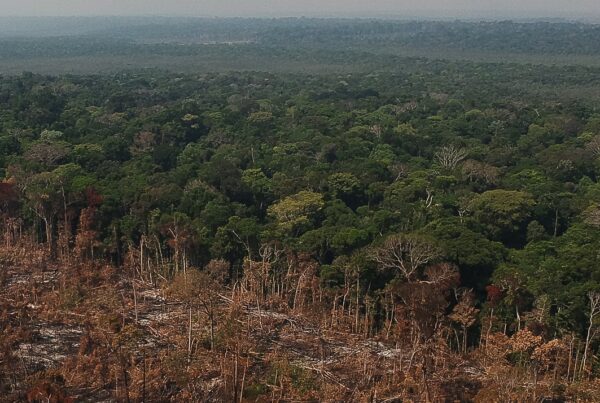
Unlike deforestation, which is characterized by the removal of forest cover, degradation involves changes in the structure and functioning of forests that can be more difficult to identify, measure and compare. Conceptual and methodological differences among countries make building a regional vision a technical challenge and, at the same time, a priority for Amazonian cooperation.
At the opening of the meeting, ACTO Executive Director Vanessa Grazziotin highlighted that addressing this challenge requires combining the knowledge already produced by the countries with a regional perspective. “We need to advance not only in the concept of degradation, but also in the methodologies that allow us to carry out this monitoring. The expectation is that we can move forward together and build a common path for the region,” Grazziotin said. The opening session was also attended by the Pro Tempore Presidency of RAFO and representatives of the Delegation of the European Union to Brazil.
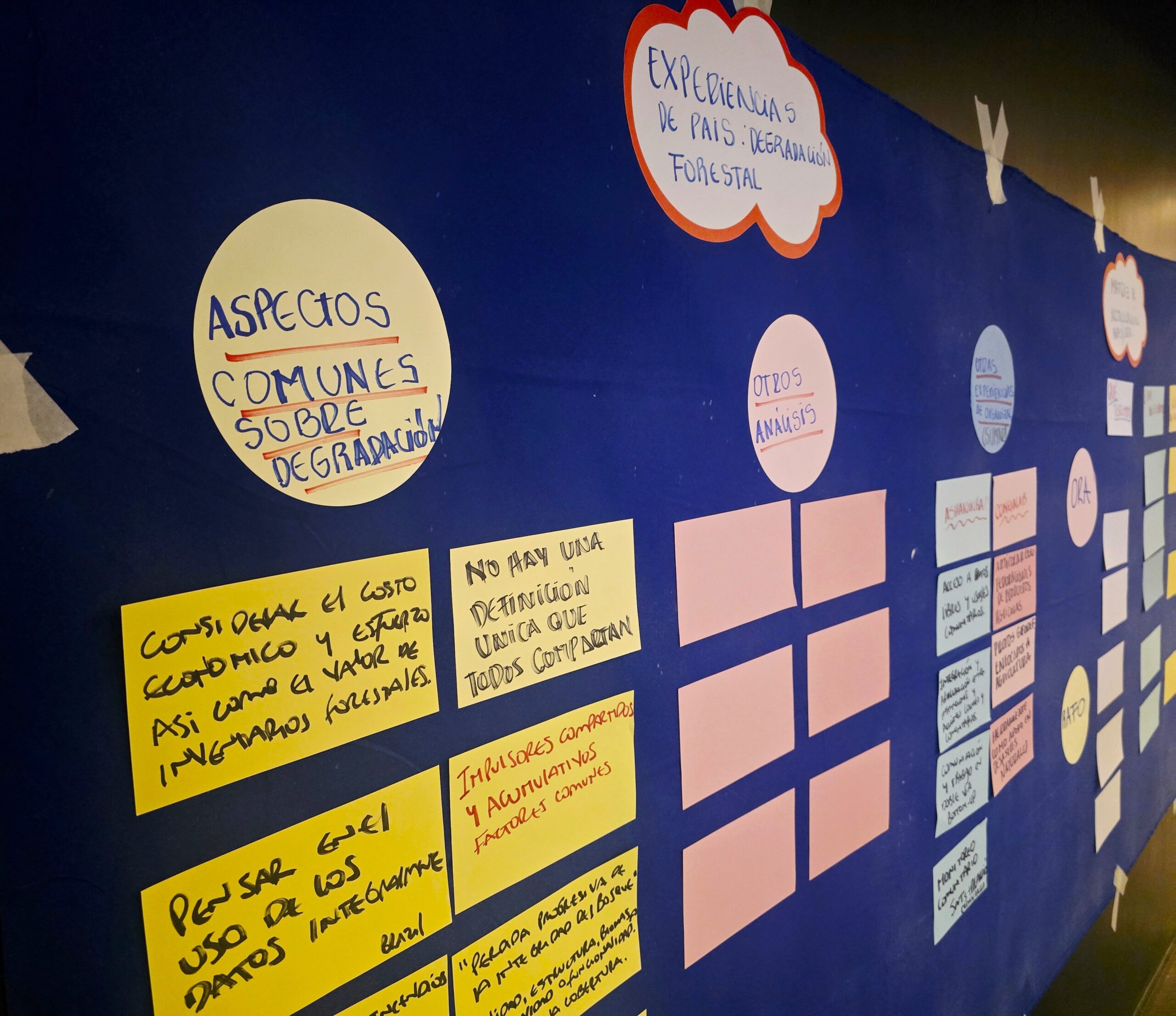
National experiences as a starting point
The Member Countries are presenting their experiences in monitoring and addressing forest degradation, allowing concepts, methodologies, advances, gaps and challenges to be compared. The exchange also includes contributions from scientific institutions, civil society organizations, Indigenous Peoples and local communities.
The Pro Tempore Presidency of RAFO, currently represented by Peru, highlighted that the exchange is particularly relevant because forest degradation has been gaining increasing importance on countries’ agendas, but there is still no homogeneous approach across the region. “We have different experiences and different ways of addressing forest degradation. This meeting allows us to learn what each country is doing, identify common ground and move toward a regional vision that respects national particularities,” the Pro Tempore president emphasized.
Integration does not mean replacing national systems with a single methodology. The objective is to identify areas of convergence, understand differences and increase the comparability of information, while preserving the specific characteristics and capacities of each Member Country.
For the Amazon Regional Observatory (ARO), comparing different sources and methodologies is essential to understanding what the data actually show about forest degradation. “Degradation is much more difficult to identify and measure than deforestation. That is why we need to understand the methodologies used by the countries, compare them with the tools available at the regional scale, and understand how these data can be integrated. The ARO can contribute precisely to building this shared Amazonian vision,” the representative said.