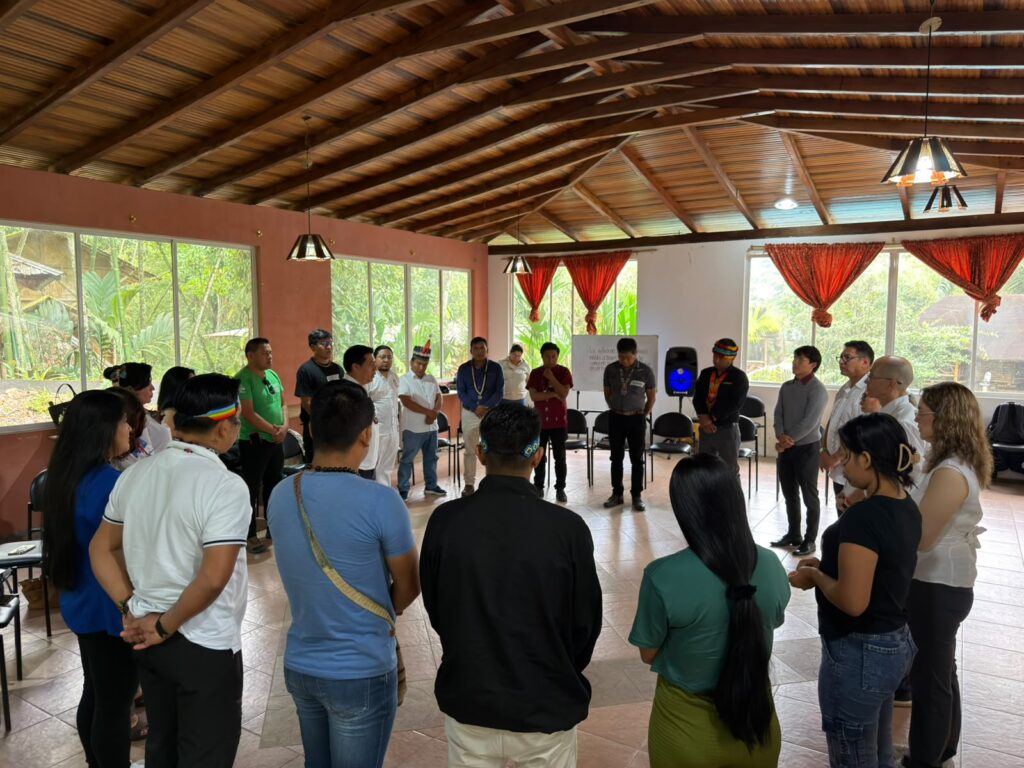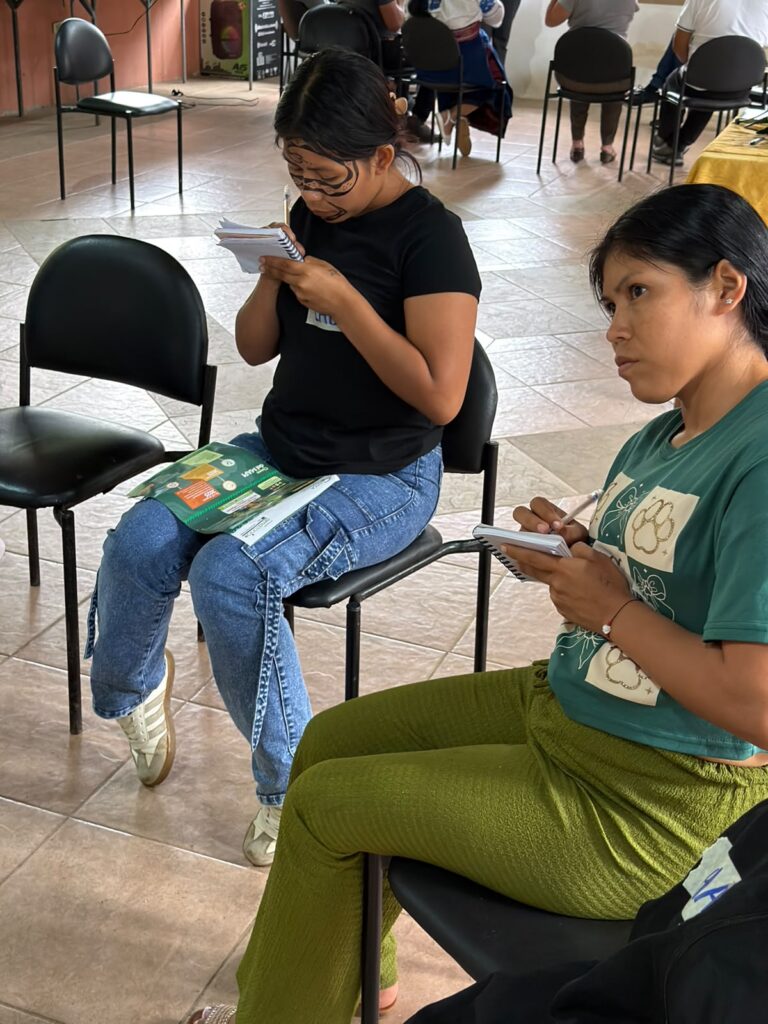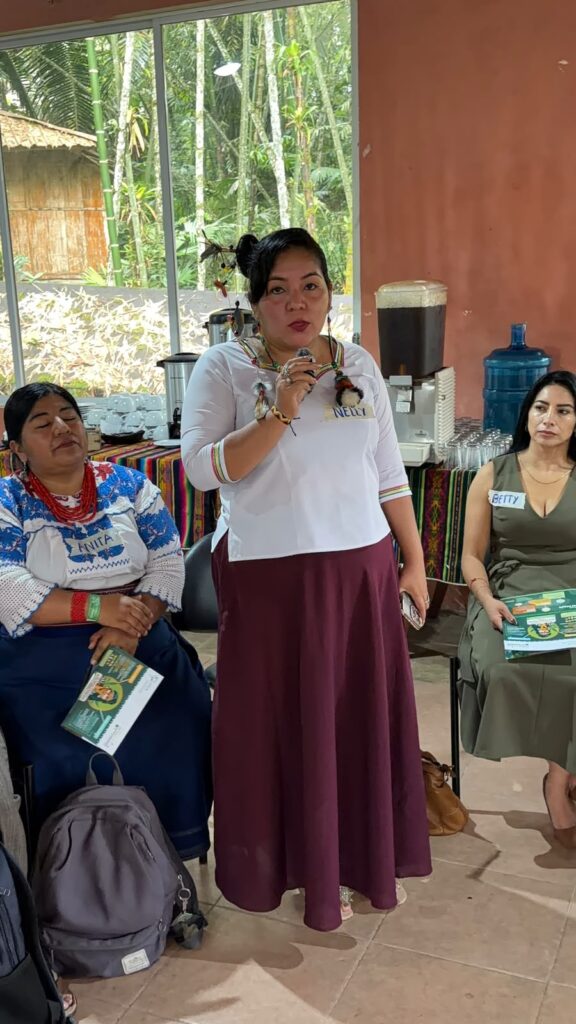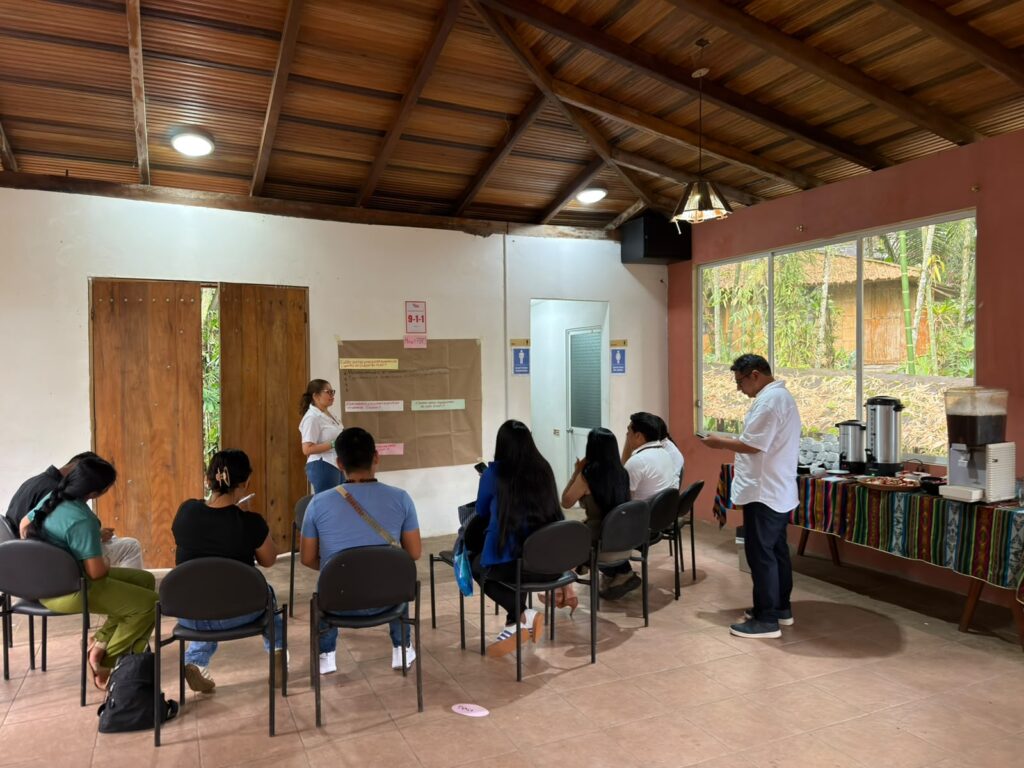
Representatives of Amazonian Indigenous organizations, government institutions, and the Permanent Secretariat of ACTO met in Puyo to define national contributions that will strengthen the implementation of the Amazonian Indigenous Peoples Mechanism (MAPI) and contribute to regional Amazon governance.
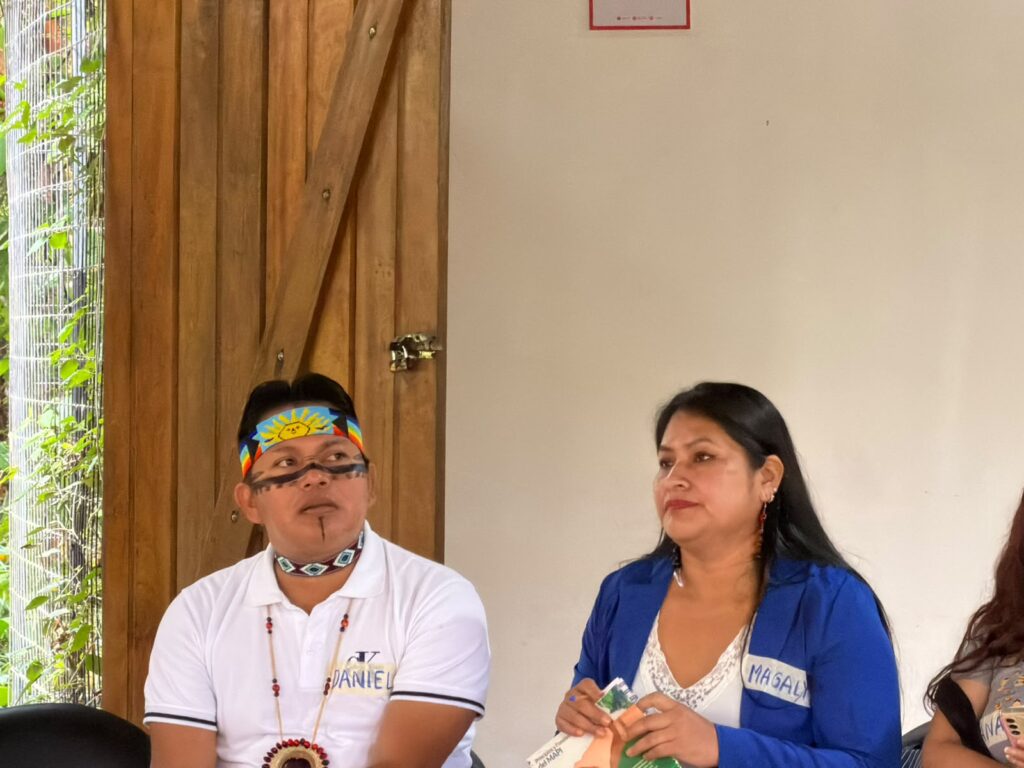
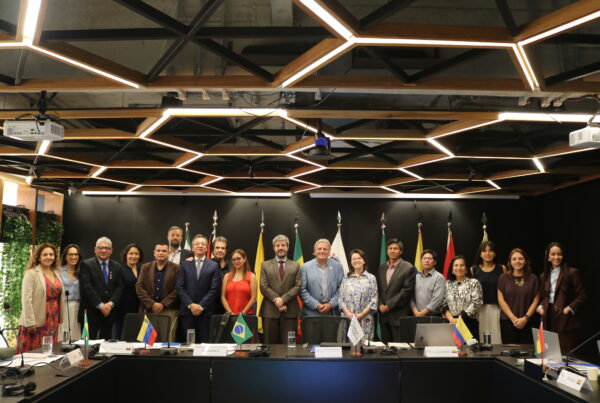
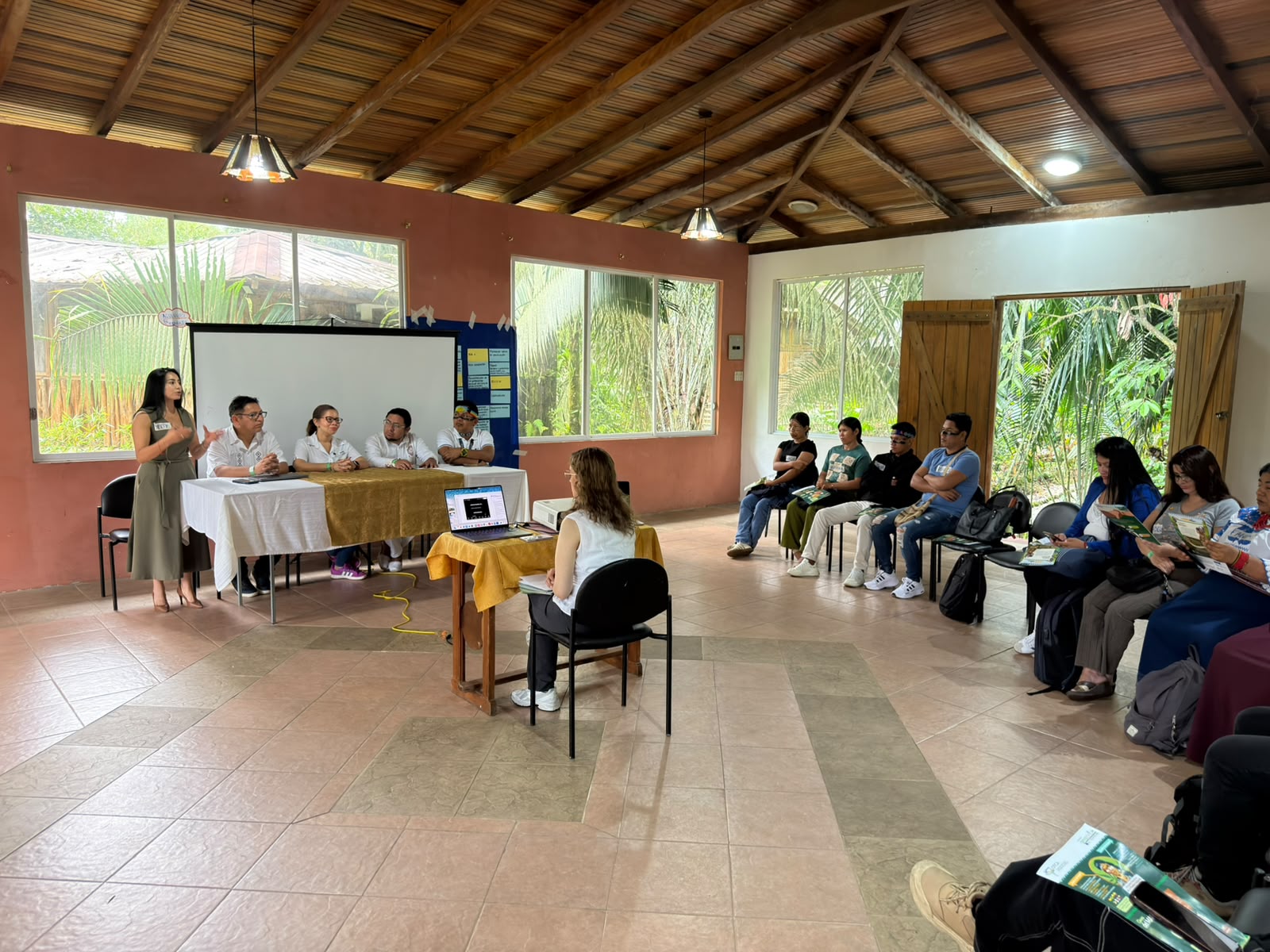
Puyo, Ecuador – Representatives of Amazonian Indigenous organizations, Ecuadorian government institutions, and the Amazon Cooperation Treaty Organization (ACTO) participated in Ecuador’s National Meeting of the Amazonian Indigenous Peoples Mechanism (MAPI) and Territorial Coordination for Amazon Governance, held on July 2–3 in the province of Pastaza. During the two-day meeting, participants developed national proposals that will contribute to strengthening MAPI and advancing a more participatory and intercultural model of Amazon governance.
Puyo derives from the Quechua word “Puyu,” meaning “cloud,” “mist,” or “cloudy place.” The Amazonian Indigenous Peoples referred to the river as Puyu Yaku because of the frequent presence of mist.
The meeting strengthened dialogue between Amazonian Indigenous organizations and Ecuadorian public institutions, fostering the joint development of proposals for the implementation of MAPI. It also provided an opportunity to gather contributions that will feed into the Mechanism’s thematic working groups and the future Forum of Indigenous Peoples, Local and Traditional Communities, spaces designed to expand Indigenous participation in regional Amazon cooperation.
The agenda began with a spiritual harmonization ceremony, followed by the official opening session, which brought together Indigenous authorities, representatives of the Government of Ecuador, the Permanent Secretariat of ACTO, and international cooperation partners. The opening reaffirmed MAPI’s intercultural character and highlighted the importance of consolidating permanent dialogue between governments and Indigenous Peoples for the protection of the Amazon.
During the first day, participants reviewed the progress made under MAPI, its operational structure, the principles guiding its implementation, and the 2026–2027 Work Plan. They also examined inputs for a proposed set of rules governing the future Forum of Indigenous Peoples, Local and Traditional Communities, which aims to strengthen participation and, in doing so, contribute ancestral knowledge, technical data, and intercultural scientific information to support the development of technologies appropriate for the preservation and sustainability of the Amazon in the context of public policy management and formulation.
One of the main agreements reached was the need to strengthen national coordination between Amazonian Indigenous organizations and public institutions, ensuring effective participation in MAPI and representation that reflects the country’s territorial and cultural diversity. Participants agreed that Amazon governance requires the permanent incorporation of traditional and ancestral knowledge, the participation of women and youth, and intercultural dialogue as fundamental pillars of decision-making.
Proposals for the MAPI thematic working groups
The working groups identified priorities that Ecuador will bring to the regional MAPI process.
The Working Group on Indigenous Peoples in Isolation and Initial Contact (PIACI) shared experiences related to the constitutional recognition of their rights, the Yasuní Popular Consultation, participatory territorial monitoring, and no-contact policies. Recommendations included strengthening early warning systems, improving coordination between public institutions and Indigenous organizations, expanding technical and financial assistance, and reinforcing monitoring and protection mechanisms against activities that threaten these peoples.
The Working Group on Human Rights Defenders and Rights focused on protecting Indigenous territories and those who defend them. Participants emphasized the need to strengthen the autonomy and self-governance systems of Indigenous peoples and nationalities, advance the legal recognition of ancestral territories, promote culturally appropriate public policies, and consolidate representation mechanisms that respect the organizational structures of Amazonian Indigenous Peoples.
Contributions to the future MAPI Forum
The second day was devoted to gathering proposals for the future Forum of Indigenous Peoples, Local and Traditional Communities, with the aim of enabling these groups to contribute their traditional and ancestral knowledge, technical data, and intercultural scientific information to support the development of technologies appropriate for preserving and sustaining the Amazon in the context of public policy management and formulation.
Among Ecuador’s main contributions were promoting the direct participation of Indigenous organizations from their territories; incorporating Indigenous elders and knowledge holders as custodians of traditional knowledge; strengthening ancestral medicine; preserving Indigenous languages; encouraging the exchange of experiences among ACTO Member Countries; and fostering generational renewal through greater participation of women and youth. Participants also proposed that the Forum hold rotating meetings across Amazonian countries and establish mechanisms to monitor the implementation of the recommendations made by its members.
Throughout the meeting, participants reaffirmed that gender equality, the participation of Indigenous youth, the protection of human rights defenders, efforts to combat deforestation, and the recognition of traditional knowledge must be integrated into all MAPI actions, thereby strengthening Amazon governance based on cooperation, respect for cultural diversity, and the effective participation of Indigenous Peoples.
The Ecuador National Meeting was organized by the Secretariat for the Management and Development of Peoples and Nationalities and the Ministry of Foreign Affairs and Human Mobility of Ecuador, in coordination with the Permanent Secretariat of the Amazon Cooperation Treaty Organization (PS/ACTO), within the framework of the Indigenous Roots for Amazon Governance (RAIGA) grant under the Amazonia+ Programme, funded by the European Union and implemented by the Italian Agency for Development Cooperation (AICS), the International and Ibero-American Foundation for Administration and Public Policies (FIAP), and Expertise France.