Brasília, 9 August 2026. On the International Day of the World’s Indigenous Peoples, the Amazon Cooperation Treaty Organization (ACTO) reaffirms its commitment to protecting the rights, territories, cultures, knowledge and ways of life of Amazonian Indigenous Peoples, as well as ensuring their full and effective participation in Amazon cooperation and governance processes.
Indigenous Peoples have maintained a millennia-old relationship with their territories and play a fundamental role in protecting biodiversity, conserving forests and building sustainable and resilient societies. Their languages, cultures, organizational systems, and traditional and ancestral knowledge constitute an essential heritage for the Amazon region and the world.
International recognition of their rights is the result of a long process of advocacy and participation. In 1994, the United Nations General Assembly designated 9 August as the International Day of the World’s Indigenous Peoples through Resolution 49/214. The date commemorates the first meeting of the United Nations Working Group on Indigenous Populations, held on 9 August 1982 in Geneva, Switzerland.
This year’s theme, chosen by the United Nations, “Honouring Indigenous Midwives: Safeguarding Life and Well-being,” highlights their essential contribution to health care, the protection of life and the transmission of ancestral knowledge.
As part of this observance, ACTO extends this recognition to Indigenous women, whose role is fundamental in preserving cultures, strengthening the well-being of their communities and keeping alive the knowledge connected to their territories.
Intercultural dialogue
Within the framework of regional cooperation, the creation of the Amazonian Mechanism for Indigenous Peoples (MAPI), approved by ACTO’s eight Member Countries, represents a milestone in strengthening intercultural dialogue. The Mechanism establishes a permanent forum for dialogue, consensus-building and cooperation between governments and Amazonian Indigenous Peoples, recognizing them as key actors in the region’s governance and sustainable development.
The Organization will continue working with its eight Member Countries and Indigenous Peoples to consolidate an Amazon region in which collective rights, participation, cultural diversity and different knowledge systems are pillars of sustainable and intercultural governance.
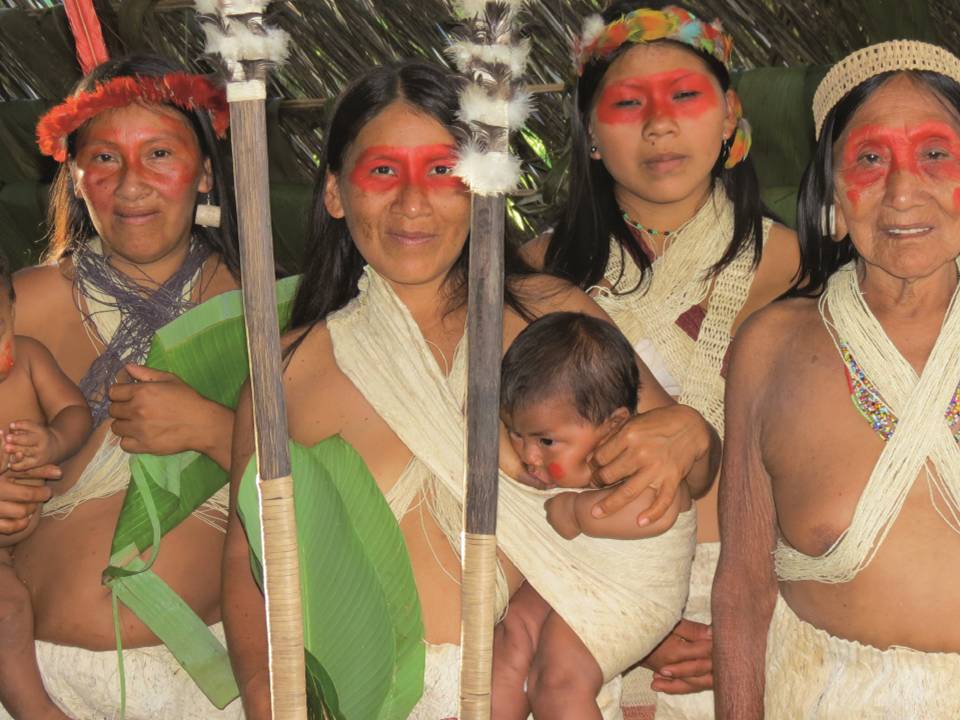
Photo: Waorani women. Photo: Yasuni Waorani, licensed under CC BY-NC-SA 2.0.