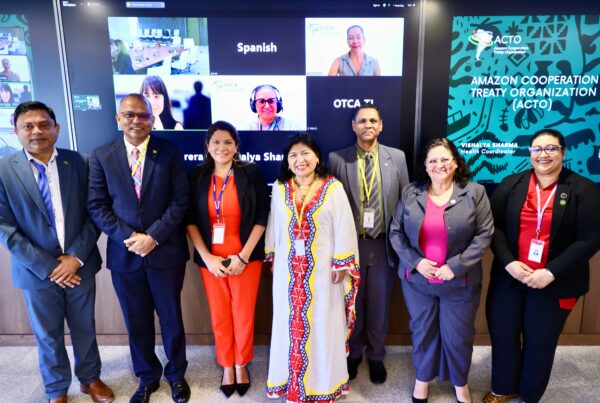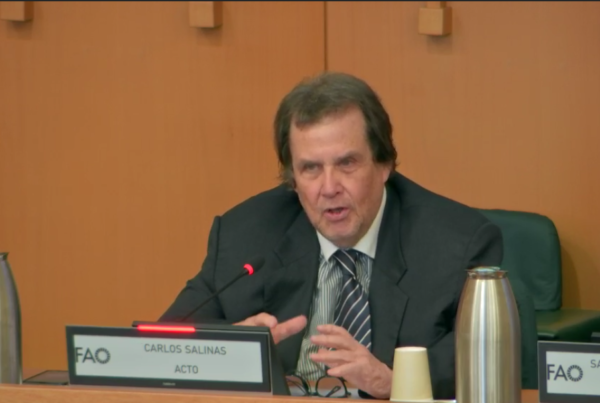
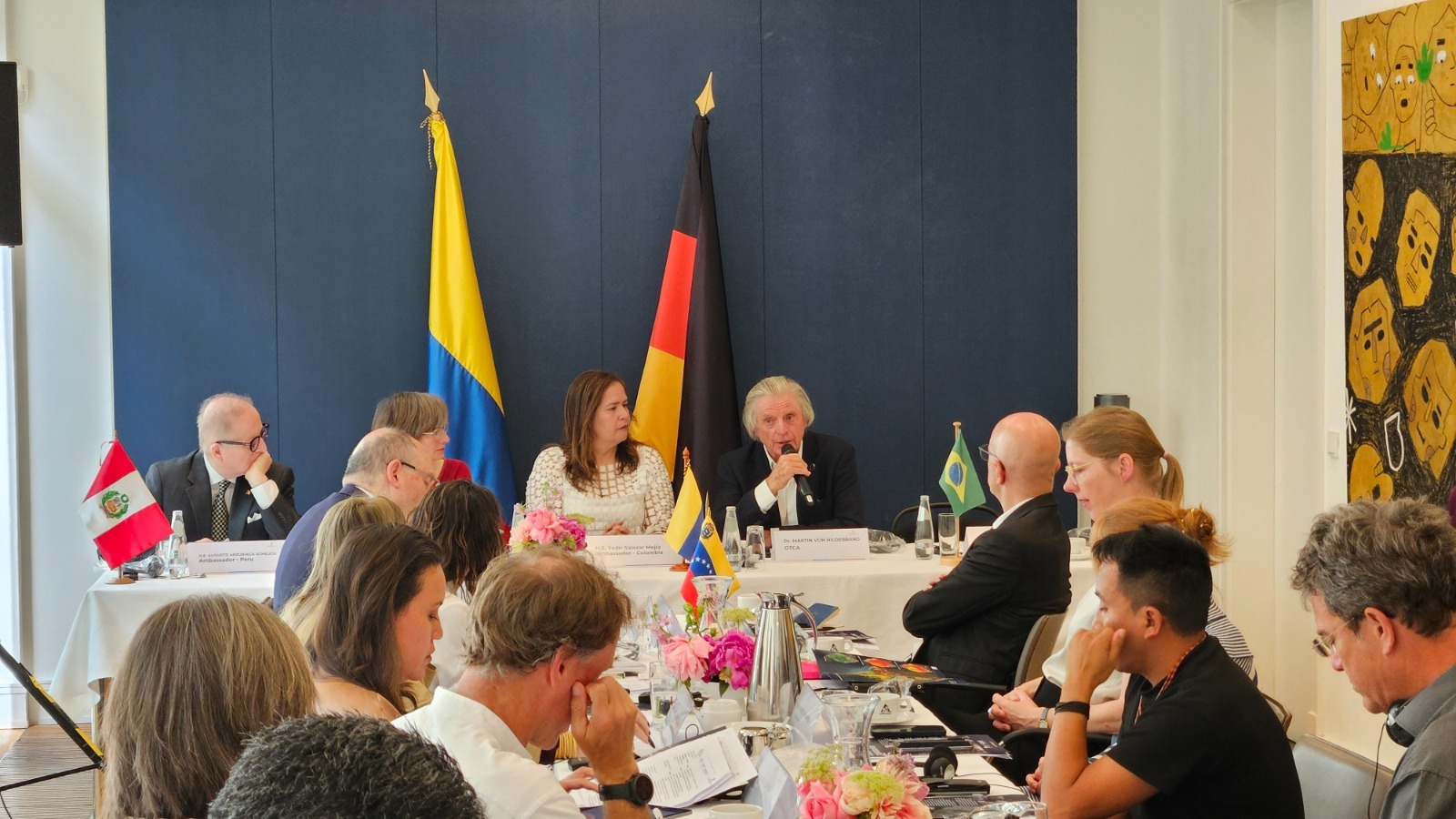
Berlin, June 2, 2026. The Embassy of Colombia in Germany hosted today the event “Frontiers of Fire: Regional Cooperation to Protect the Amazon in the Face of a New Climate Risk Cycle – El Niño 2026–2027,” a platform for diplomatic, technical, and scientific dialogue aimed at strengthening regional cooperation in addressing the risks associated with climate change, forest fires, and the possible intensification of conditions linked to the El Niño phenomenon.
The event, held within the framework of the Amazon Week 2026 in Berlin, was organized by the Embassy of Colombia in Germany and the Amazon Cooperation Treaty Organization (ACTO), with the support of the German Cooperation Agency (GIZ) and the Inter-American Development Bank (IDB). Its objective was to highlight the importance of Integrated Fire Management as a strategic agenda for climate action, biodiversity conservation, public health, territorial security, and cross-border cooperation in the Amazon.
The opening ceremony featured the participation of the Ambassador of Colombia to Germany, H.E. Yadir Salazar Mejía, as well as the Ambassador of Brazil to Germany, H.E. Rodrigo de Lima Baena Soares; the Ambassador of Peru to Germany, H.E. Augusto David Teodoro Arzubiaga Scheuch; the Ambassador of Costa Rica to Germany, H.E. Antonio José Lehmann Gutiérrez; and the Chargé d’Affaires a.i. of the Bolivarian Republic of Venezuela in Germany, Vartkes Martin Saatdjian Castellanos.
During the event, participants emphasized that the Amazon is facing a structural transformation of its fire regime, driven by climate change, forest degradation, and the rapid transformation of landscapes. Addressing this challenge requires diplomatic cooperation, integrated monitoring, prevention, strengthened local capacities, sustained financing, and recognition of the traditional knowledge of Indigenous Peoples and Amazonian communities.
The event also highlighted the progress made by ACTO and its Member States—Bolivia, Brazil, Colombia, Ecuador, Guyana, Peru, Suriname, and Venezuela—in building a regional architecture for Integrated Fire Management, based on the Memorandum of Understanding on Integrated Fire Management, the Amazon Network for Integrated Fire Management (RAMIF), and the Amazon Regional Observatory (ARO). These instruments seek to strengthen coordination among Amazonian countries in addressing a phenomenon that does not recognize national borders.
As part of the program, a group of Colombian scientists from the diaspora in Germany also participated. The group was composed of researchers with technical and scientific expertise related to the Amazon. Their presence reinforced the connection between diplomacy, science, and the diaspora, and demonstrated the potential of Colombian communities abroad to contribute to the knowledge, monitoring, and protection of the Amazon biome.
The event concluded with a call to deepen regional and international cooperation to protect the Amazon from current and future climate risks. The Embassy of Colombia in Germany and ACTO highlighted the need to coordinate efforts among governments, regional organizations, international cooperation partners, academia, Indigenous communities, and the scientific diaspora to transform knowledge into action and strengthen the region’s preparedness for the 2026–2027 climate risk cycle.